
ZSkills blog
How to Help Your Child Speak Arabic at Home: 8 Story-Based Ideas
Simple, playful ways to get your child speaking Arabic at home, even if you are busy or not confident in Arabic yourself. Eight story-based ideas for ten minutes a day.
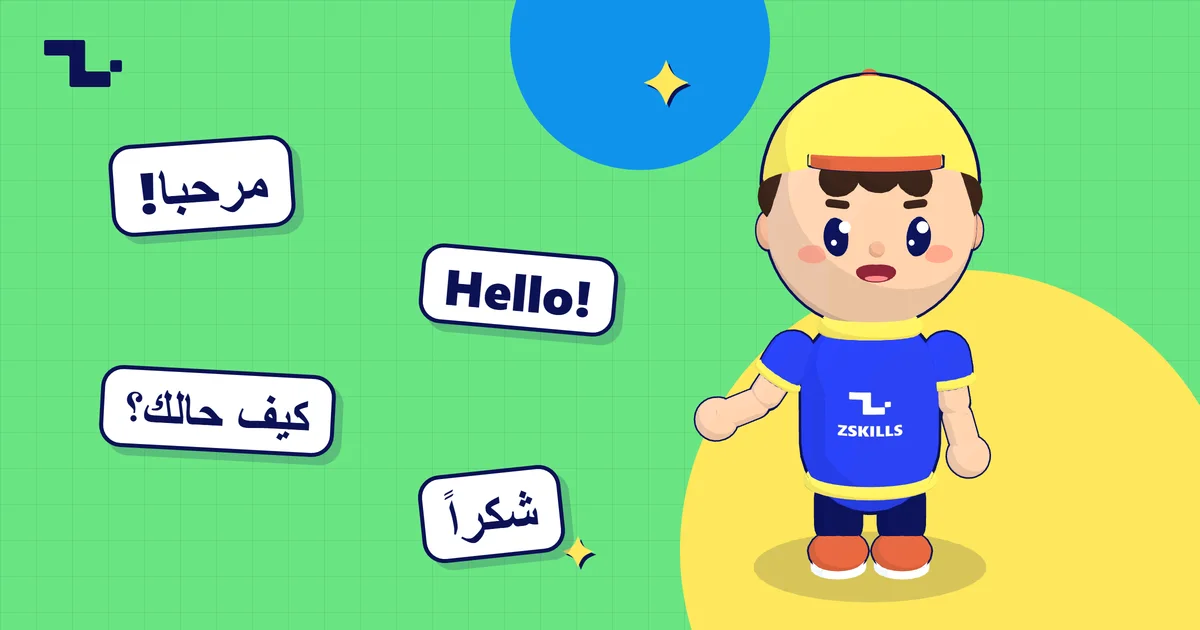
The easiest way to help your child speak Arabic at home is little and often: ten minutes a day of talking, playing, and storytelling in Arabic does more than an hour of worksheets once a week. Focus on speaking before perfection, praise every try, and turn Arabic into part of family fun rather than a separate lesson.
Start with speaking, not worksheets
Children learn to speak a language by using it for things they care about: asking for a snack, telling a joke, winning a game. At home, your goal is not to teach grammar. It is to create small, happy moments where Arabic is the natural choice.
Two simple rules make everything below work better:
- Keep it short. Ten relaxed minutes beat a long, tired session.
- Don't correct every mistake. Repeat the sentence back correctly and keep the conversation going. Confidence grows faster than accuracy at first, and accuracy follows.
8 story-based ideas to try this week
1. Bedtime stories with a twist
Read or tell a short Arabic story, then ask your child to retell it with one change: a new ending, a silly character, or a different place. Retelling is one of the best ways to build real speaking.
2. The "name it" hunt
Pick a room and a category ("things that are blue", "things in the kitchen"). Your child races to name as many as they can in Arabic. Keep a score and let them win sometimes.
3. Play shop or restaurant
Set up a pretend shop, café, or restaurant. Take turns being the customer and the shopkeeper. Everyday phrases like greetings, prices, and "I would like…" become easy through play.
4. Draw it, then describe it
Your child draws a picture, then describes it to you in Arabic: who is in it, what they are doing, what happens next. Drawing gives shy children something to point to while they find their words.
5. A family word of the day
Stick one new Arabic word on the fridge each morning. Everyone tries to use it at least three times before bedtime. Make the funniest use of the word the winner.
6. Voice notes to grandparents
Help your child record a short Arabic voice note for a grandparent, cousin, or family friend about their day. A real listener gives children a real reason to speak, and the replies are a lovely reward.
7. Turn cartoon time into talk time
After an Arabic cartoon or short show, ask your child to tell you what happened, or to act out their favourite scene. Screen time becomes speaking time.
8. Play games in Arabic
Card games, board games, and guessing games work beautifully in Arabic. Counting, taking turns, and cheering ("my turn!", "I win!") all happen naturally, and children barely notice they are practising.
If you are not confident in Arabic yourself
You can still help a lot. Learn alongside your child and let them teach you a word or two, which children love. Use Arabic stories, songs, and shows as your "second voice". And be honest: saying "let's find out together" shows your child that learning a language is normal and fun at any age.
Keep it fun
- Praise effort, not perfection: "I love how you tried that word!"
- Follow your child's interests, whether that is football, animals, or space.
- Stop while it is still fun, so they want to come back tomorrow.
When to get extra help
If your child avoids speaking Arabic, has stopped enjoying it, or you would like a structured plan, a tutor can help. Arabic Language Foundation is the ZSkills program for children ages 6–12. It turns lessons into stories, with guided speaking, drawing, role-play, and vocabulary games.
You can choose private or group lessons through Find Your Tutor. Private lessons come in weekly packages of 4, 8, or 12 classes, and a second child can join the same private lesson for free. Group sessions meet weekly in Sharjah on Saturdays and in Dubai on Sundays.
Quick answers
How much Arabic practice does my child need at home?
About ten minutes a day is a great start. Regular, short, happy moments matter more than long sessions.
Should I correct my child's Arabic mistakes?
Gently, and not every time. Repeat the sentence back correctly and keep talking, so your child keeps their confidence.
What if my child only answers in English?
Stay playful and keep offering Arabic. Games, role-play, and voice notes to family give children a reason to switch, without pressure.
Programs related to this article
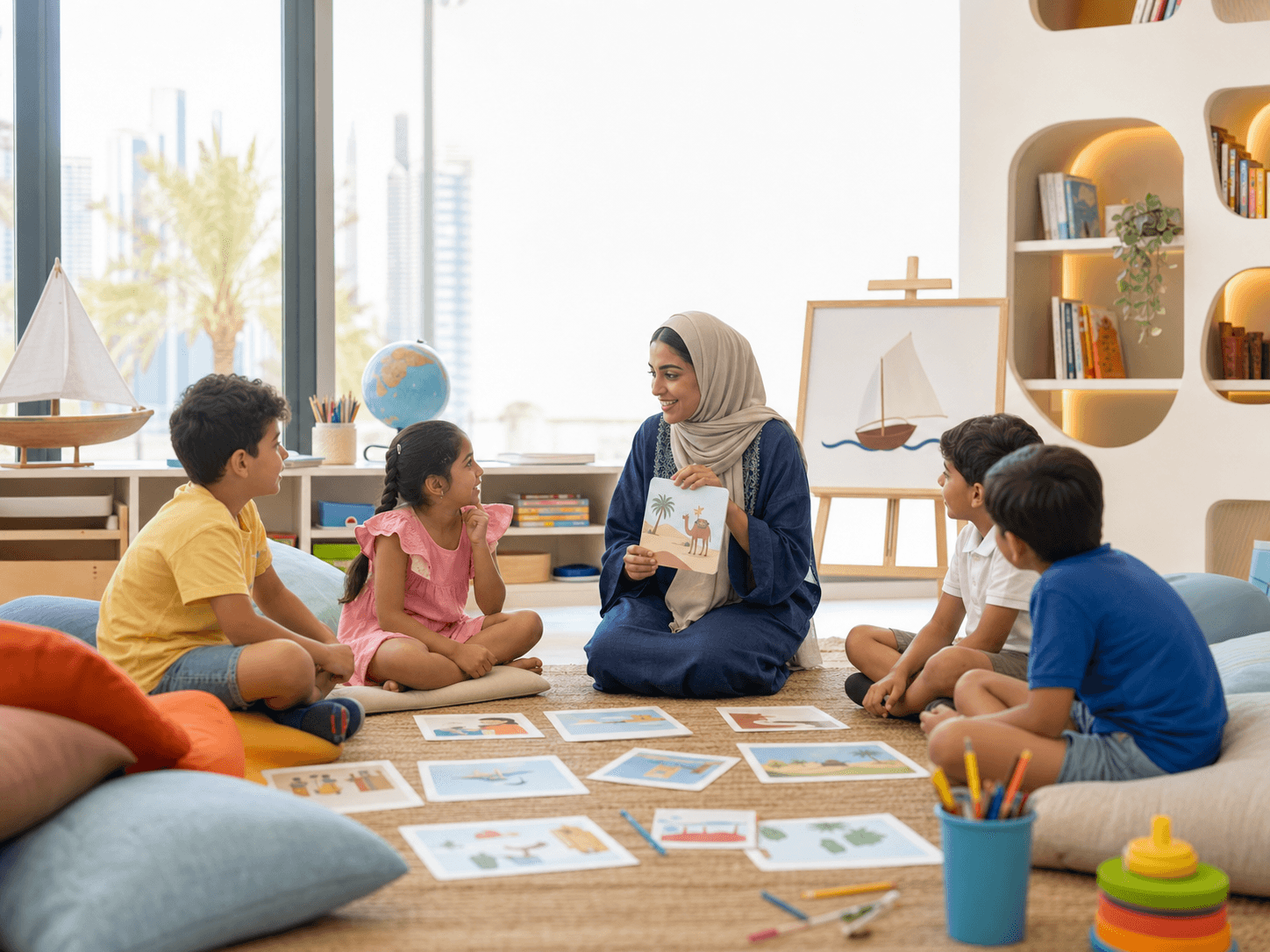
Arabic Language Foundation
We turn classes into stories
A story-led Arabic language foundation where children learn through roles, missions, and playful practice.